July 21 – 23, 2026 • Nairobi
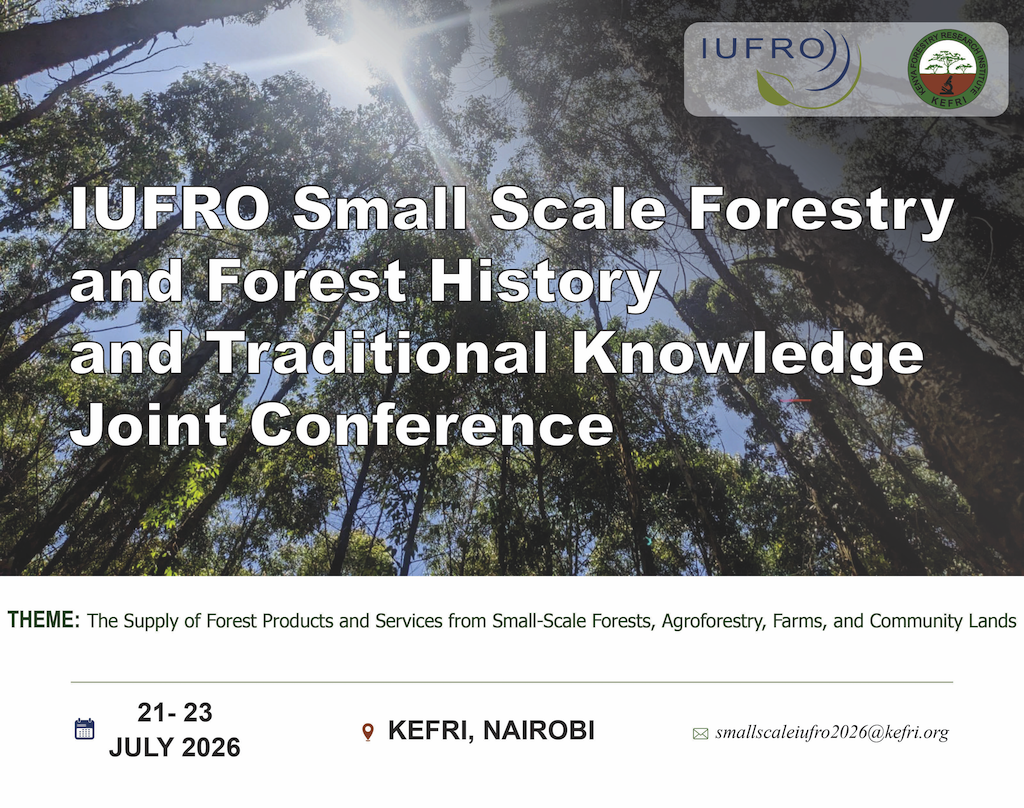
"The Supply of Forest Products and Services from Small-Scale Forests, Agroforestry, Farms, and Community Lands”
Three days of science, policy dialogue, and field insights.
The International Union of Forest Research Organizations (IUFRO) Working Groups on Small-scale Forestry and Forest History and Traditional Knowledge will hold a conference in Nairobi, Kenya, from 21st to 23rd July 2026, followed by an optional post-conference tour. The objective of this conference is to exchange knowledge among researchers and other professionals on family and community forest ownership and management, historical facts and narratives of forests, traditional ways of knowing about forests, and related fields. The conference will be held at the Kenya Forestry Research Institute, Nairobi, Kenya.
The conference theme is: “The Supply of Forest Products and Services from Small-Scale Forests, Agroforestry, Farms, and Community Lands.”
The conference will bring together researchers, managers, policymakers, and community representatives from across the world in one of the globe’s longest-inhabited landscapes providing a unique focus on understanding how traditional approaches to managing small areas of forests and trees (whether owned individually, by family, or collectively) can be supported and enhanced to ensure sustainable provision of a wide range of products and services. While most human societies have developed ways of sustainably managing and using small areas of forests and trees, the social, environmental and institutional characteristics that enable this are highly variable. It is important to know how traditional and small-scale forest management can be supported and enhanced to ensure sustainable provision of products and services, especially under pressures of climate change, poverty, and industrialisation. Recognising that much of the world’s forest research is oriented to large-scale management by governments and industry, this conference highlights the essential role of small-scale landowners and local people and their forests and trees in addressing the global challenges.
In addition to topics related to the theme, all papers that address one or more of the topics related to Small-scale Forestry or Forest History and Traditional Knowledge will be considered. These additional topics include, but are not limited to:
Strengths and challenges of small-scale forestry.
Understanding long-term changes in people and landscapes.
Sustainable supply of timber and non-timber products.
Social benefits and impacts for owners, communities, and stakeholders.
Enhancing returns from marketing, forest co-operatives, growers’ organizations, and other arrangements.
Innovations in modeling landowner behavior and decision support systems.
Adapting traditional forest management to address new problems.
Traditional knowledge (re)shaping the values and practices of forests.
Forest histories as a frame to informing present and future forest management.
Forest tenure and governance systems.
The role and effectiveness of government policies, programs and subsidies.
Research, education, and extension for small-scale and community forest owners and managers.
Developing and adapting management techniques and technologies specific for the needs of small-scale and community forest owners and managers.
Plenary and concurrent sessions.
In-conference field trip
Plenary and concurrent sessions.
Optional post-conference tour.
All abstracts will be reviewed by at least two members of the conference scientific committee. The materials will be assessed based on relevance to the conference, scientific contribution, novelty/innovativeness, adequacy of the research/study methods, and the organization and writing quality of the abstract. Acceptance decisions, and any comments from the reviewers, will be returned to the lead author.
The link below should be used to submit proposals. The information requested includes a presentation title, an abstract (maximum of 1,500 characters), a list of authors and affiliations, and desired presentation type (full oral presentation or speed talk). The speed talks are in place of poster presentations. To submit a proposal, please use this online form..
Submit Your Abstract16 February 2026.
16 March 2026.
16 April 2026.
23 April 2026.
14 May 2026.
23 April 2026.
All conference participants are invited to take part in the in-conference tour, organized as an integral component of the conference program. Participants may select one of the following two options:
This visit will showcase how smallholder farmers have organized themselves to commercialize tree growing through the sustainable production and marketing of timber products. Participants will gain insights into how a timber marketing cooperative has successfully implemented farmer-led tree inventories and developed strategic business plans for farm forestry. The tour will also highlight on-farm diversification strategies and approaches for accessing high-quality seedlings.
Participants will visit botanical gardens in Kenya featuring both indigenous and exotic species, offering insights into how indigenous ecological knowledge systems have been documented and integrated into national policies to support community development. The visit will further explore the evolution of forest management in the country, with a particular focus on successful approaches to integrating communities into forest governance.
Accompanying persons may join at a fee of 85 EUR
This tour is planned for three days with a minimum of two site visits scheduled each day. It is designed to provide participants with practical insights into the establishment and management of forest plantations on private farms, including associated opportunities and challenges.
Forest & Agroforestry Focus
Participants will explore various models of tree plantation
development, including contract farming with small-holder farmers,
and examine their implications for livelihoods and sustainability.
The program will also highlight tree planting practices in Kenya’s
dryland areas, as well as agroforestry and agrosilvopastoral
systems adapted to these environments.
Traditional Knowledge Integration
In addition, the tour will offer exposure to traditional forest
management systems and their role in contemporary resource
governance.
Maasai Mara Experience
The excursion will conclude with a visit to the Maasai Mara,
providing participants with an opportunity to experience the Great
Wildebeest Migration, one of the world’s most remarkable natural
spectacles.
All conference attendees and accompanying persons are invited to attend the optional post-conference tour. Participation is available at a cost of 550 EUR, which covers meals and accommodation throughout the trip.
Register before 21st May 2026
22nd May to 21st June 2026
To qualify for Student rate, you must currently be enrolled in a degree programme at a higher educational institute.
Register before 21st May 2026
22nd May to 21st June 2026
If a person will be traveling with you, such as a spouse or family member, but not attending the conference, there is an option for them to join for in-conference and post-conference tour, and conference banquet.
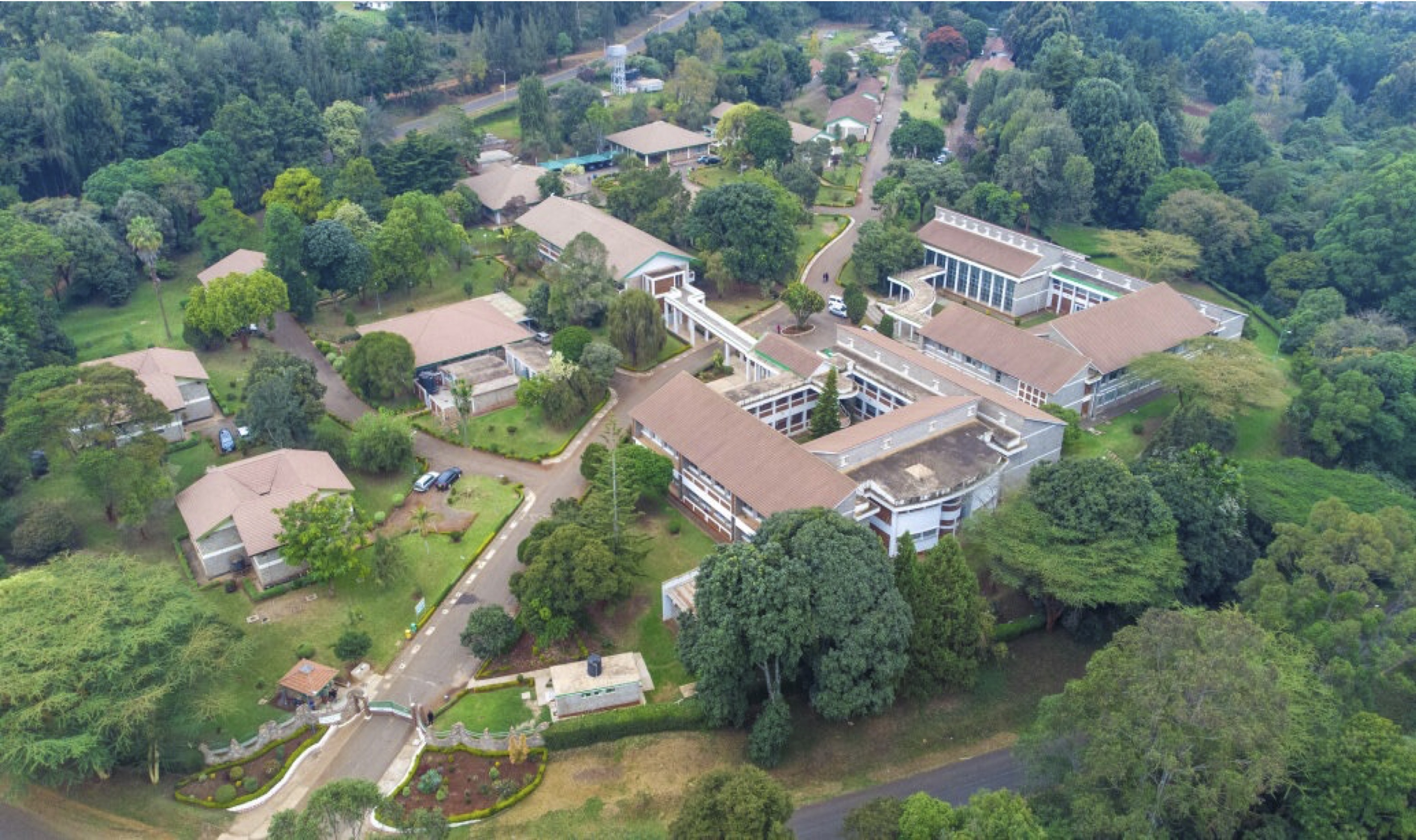
The conference will be held at the headquarters of the Kenya Forestry Research Institute, which is located about 30 km from Nairobi city centre along the Nairobi-Nakuru highway. It is easily accessible from Jomo Kenyatta International Airport through the Southern By-Pass or the Nairobi Expressway
Collaboration is at the heart of KEFRI's work. Join us in building the next decade of impact.